
Why Professional Mulch and Rock Installation Prevents Weed Invasions in The Villages
The Villages is defined by its manicured neighborhoods, consistent landscaping standards, and attention to outdoor beauty. Yet many Village homeowners battle a constant frustration that undermines all their hardscape investments and landscape design efforts: weeds that invade mulch and rock beds persistently despite repeated removal efforts.
Weeds appear in beds you just cleaned. They spread across the newly installed mulch within weeks. They return constantly, no matter how often you pull them or spray herbicides. The weeds are winning because the basic foundation of weed prevention is missing: professional installation of quality mulch and rock using proper technique and proven weed barriers.
Why The Villages Landscape Beds Are So Vulnerable to Weed Invasion
The Villages’ sandy soil and design-conscious community create conditions where weed problems are worse than in surrounding areas.
Sandy Soil Provides Minimal Resistance to Weed Seeds
The Villages’ sandy soil contains few organic compounds and minimal biological activity that would normally suppress weed seed germination. Any weed seed that lands on the surface or is deposited by wind finds ideal conditions to germinate and establish. Unlike clay-based soils, where weed seeds struggle to find the moisture and air they need, sandy soils provide perfect conditions.
Rapid Water Infiltration Creates Ideal Moisture for Germination
Water drains through sandy soil rapidly, but that same rapid drainage means weed seeds get consistent moisture without being waterlogged. Sandy soils essentially create an ideal seed starting medium.
Frequent Irrigation Compounds the Problem
Landscape irrigation systems designed to keep ornamental plants healthy provide constant moisture to weed seeds as well. The very irrigation that keeps desired plants thriving simultaneously creates ideal conditions for weed germination and growth.
Continuous Growing Season Allows Year-Round Weed Germination
Central Florida’s mild winters mean weed seeds germinate throughout the year, not just in spring and summer. Weed pressure in The Villages is relentless because there is no true dormant season when weeds stop growing.
How Professional Mulch and Rock Installation Eliminates Weeds
Professional installations employ multiple steps that consumer approaches miss entirely.
Thorough Bed Preparation and Existing Weed Removal
Before any barrier is installed, the bed is cleared of all existing vegetation, debris, and visible weed roots. This removes the seed bank present in the soil surface.
Installation of Quality Weed Barrier Fabric
Professional landscape fabric or geotextile is installed over the entire bed, creating a physical barrier that prevents seeds from reaching soil and prevents soil-borne seeds from germinating. This is the critical foundation step that DIY installations typically skip.
Proper Barrier Securing and Edge Treatment
The barrier is properly secured so it does not shift under foot traffic or water runoff. Edges are carefully handled so barriers cannot be pushed aside. Openings are cut precisely where plants are installed, so barriers are never compromised around plantings.
Application of Quality Mulch or Rock at Proper Depth
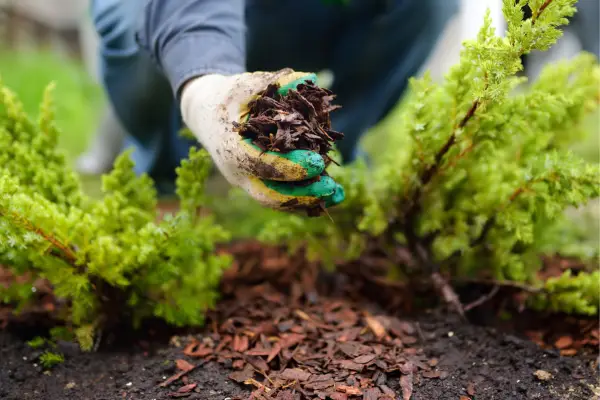
Quality mulch (wood chips, bark, or other organic material) or decorative rock is applied at a 3 to 4-inch depth over the entire barrier. This depth provides weed suppression while looking proportional and attractive.
Strategic Application Around Plant Bases
Mulch is carefully applied around plant bases without smothering stems or trunks. Rock or mulch is kept slightly back from plant stems to promote air circulation and prevent rot.
Maintenance Scheduling Extends the Weed Prevention Benefit
Even professional installations require scheduled maintenance to remain effective indefinitely.
Annual Mulch Top-Up
As mulch decomposes and breaks down, an annual top-up application maintains the 3 to 4 inch depth that provides maximum weed suppression. Typically, 1 to 2 inches of new mulch is added annually.
Barrier Inspection and Repair
The weed barrier is inspected periodically to ensure it has not been compromised. Any tears or sections that have shifted are repaired or replaced. Barriers typically remain effective for 5 to 7 years before eventually requiring replacement.
Spot Treatment of Breakthrough Weeds
Occasionally, a weed may find its way through the barrier system. Spot treatment removes it before it establishes significantly. This is far easier than managing widespread weed invasions.


