
How Eustis Homeowners Keep Lakefront Yards From Washing Out in Heavy Rain
On an inland lot, stormwater heads for the street. On a lakefront lot in Eustis, everything slopes the other way, toward Lake Eustis, and every heavy rain carries a little of the yard with it. The slope that gives these lots their view is the same slope that feeds the erosion. Here is why shoreline yards wash out differently and what holds them steady through every storm season.
Why a Lakefront Lot Washes Out Differently
A lakefront yard follows different rules than an inland one, and the difference starts with which way the ground tilts and what the soil is made of.
The Whole Yard Slopes Toward the Water
Standard drainage logic assumes the street sits downhill. On a lakefront lot, the lake sits downhill, and the whole lawn funnels toward it. Rain gains speed as it crosses the yard, and the last few feet of bank receive the fastest, most soil-laden water of the storm. The problem rarely starts at the waterline. It starts at the back fence and gathers strength across the lawn.
Sandy Banks, Wave Wash, and the Line Where Grass Meets the Lake
Central Florida soil runs sandy, and sandy banks hold together loosely. The line where grass meets the lake takes abuse from both directions: runoff pushes down from above, and wave wash pulls sand from below. Turf roots grip the top few inches, but beneath them, bare sand washes freely. A bank that looks solid in a drought can lose a visible strip in one wet summer.
What Heavy Rain Actually Takes From a Shoreline Yard
Washouts rarely arrive as one dramatic event. They build storm by storm, and the damage shows in what leaves the yard.
The Rills and Gullies That Form After One Storm Season
A single storm carves small channels called rills, and each rill funnels the next storm’s water into a tighter path. Within one rainy season, rills deepen into gullies that grow their own watersheds. A smooth lawn becomes a network of channels, each one widening with every storm that follows.
Mulch, Sod, and Soil Ending Up in the Lake Instead of the Yard
Lightweight material leaves first. Mulch floats away on the first sheet of runoff, sod peels off a saturated bank, and fine soil stays suspended in the water, traveling farther than anything visible from the yard. A shrinking yard and a cloudier lake are the same event seen from two sides.
How Professional Drainage Changes Where the Water Goes
Drainage work has one goal: slow the water down and give it a controlled path before it reaches the bank. Three tools do most of that work.
French Drains That Intercept Runoff Before It Reaches the Bank
A French drain is a gravel-filled trench with a perforated pipe, and it catches water mid-slope instead of letting it run the full length of the yard. A crew runs it across the slope, intercepting runoff while it still moves slowly. The same approach relieves yard flooding and erosion on inland lots in Leesburg, and it works the same on a bank.
Downspouts and Gutters Pointed Away From the Slope
A roof sheds thousands of gallons in a single storm, and a downspout pointed at the lake concentrates all of it on the slope. Downspout relocation moves that discharge to a swale or drain field where the ground can absorb it slowly.
Grading That Slows Water Down Instead of Speeding It Up
Grading reshapes the surface itself. A shallow swale cut across the yard intercepts sheet flow, and a gentle berm steers a low spot’s water toward the drain instead of the bank. The goal is the opposite of a smooth chute: water should cross the lawn slowly and arrive at the shore with almost no energy left. Grading mistakes can destroy new sod and accelerate erosion, so this work belongs to a crew with the right equipment.
Retaining Walls and Terraces for the Slope to the Shore
Where drainage slows the water, hardscape holds the ground itself. Two structures do most of that work on a steep shoreline lot.
A Low Wall That Holds the Bank in Place
A low retaining wall along the bank breaks the slope at its steepest point and gives the soil something solid to lean against. The wall holds the ground while drainage behind it removes the water that would otherwise push it. The wall also gives wave wash a barrier to break against instead of the soil itself.
Terraced Levels That Turn a Steep Lot Into Usable Ground
Steeper lots benefit from terracing, which steps the slope into a series of levels that each hold their own soil. Every step slows the water above it, and every flat area becomes usable ground for planting beds or a path toward the dock.
Planting and Ground Cover That Anchor the Soil
Hardscape controls the water. Planting anchors what the water would otherwise take.
Deep-Rooted Florida-Friendly Plants on the Bank
Roots do the quiet work of holding a bank together, and Florida-friendly plants with deep root systems knit the soil far below the reach of turf grass. A band of deep-rooted planting along the bank outperforms a mowed edge, because mowing keeps roots shallow. Native shoreline species tolerate wet soil and seasonal flooding.
Rock and Sod Where Mulch Would Float Away
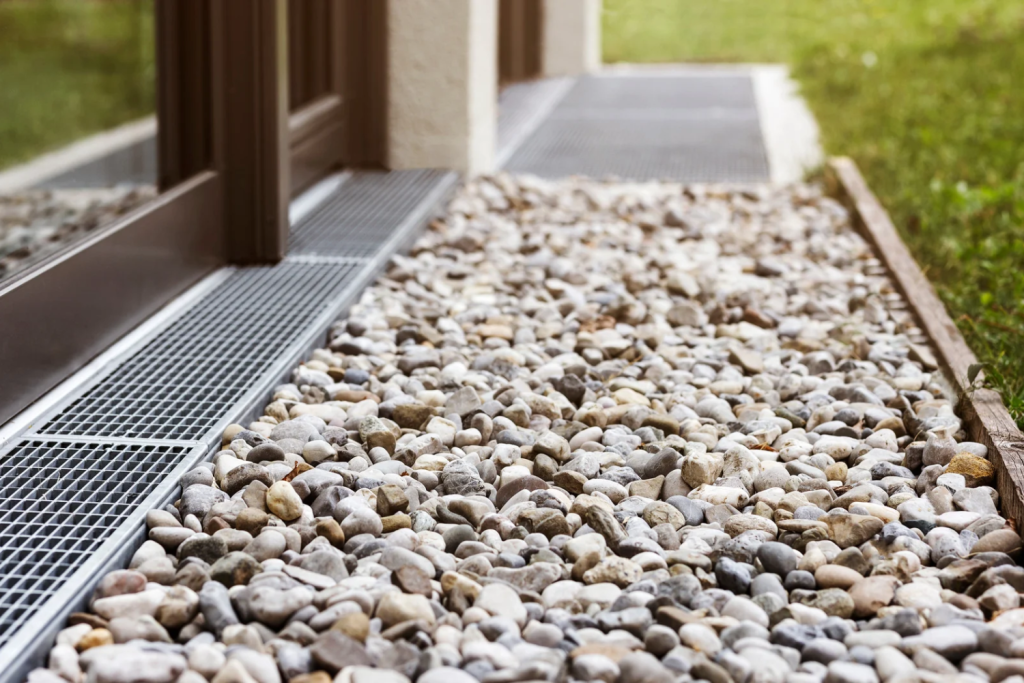
Mulch floats, so a slope that drains toward the lake is the wrong place for it. Decorative rock stays put through every storm and covers the bare ground where weeds would otherwise move in. On regraded areas, fresh sod reestablishes grass, and its roots knit the new soil together within a single growing season.
A Shoreline Yard Built to Stay Put
A lakefront yard holds when three systems work together: drainage that controls where the water goes, walls or terraces that break the slope, and planting that anchors the soil. A professional assessment reads the slope, the soil, and the runoff paths in a single visit, and it flags anything that touches the waterline, since shoreline work below a certain point can fall under state or county environmental rules. The result is a yard that keeps its ground and a lake that keeps its water. On Lake Eustis, both happen together or not at all.


