
Why Ants Keep Nesting in Your Pavers and What a Professional Fix Looks Like
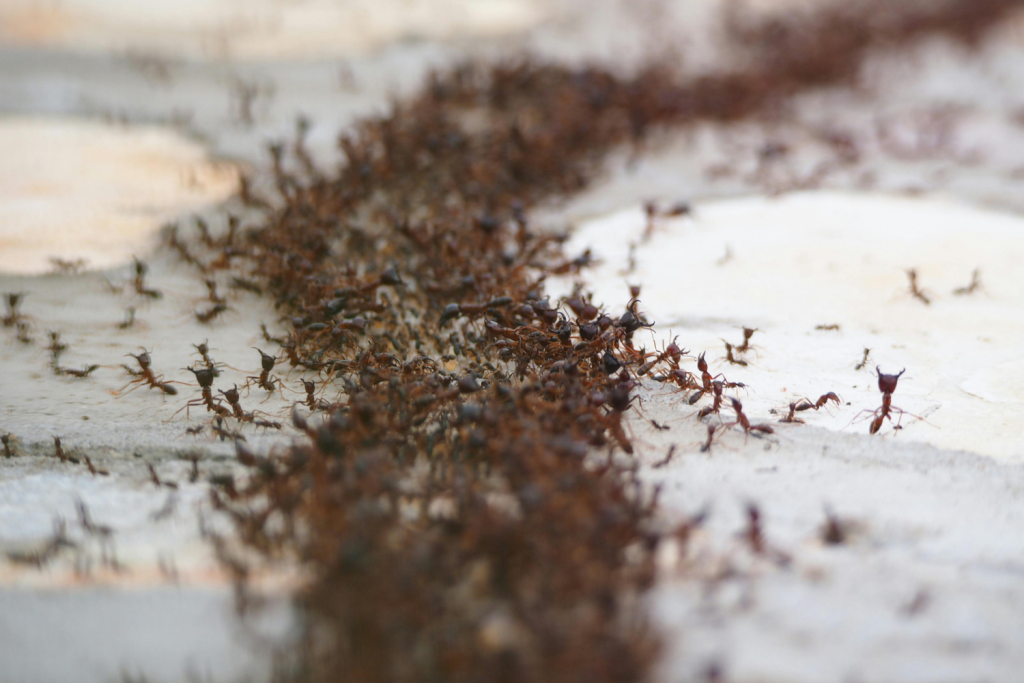
You spot a small sand mound between the stones, then a trail of ants marching across the patio. Most homeowners spray the visible ants and call it done. That approach treats the symptom and ignores the cause. The ants above ground are the clue, and the real story unfolds in the base beneath your pavers.
How Ants Enter Through a Crack and Build a Nest Under Your Pavers
A pavement ant is a small brown insect, about an eighth of an inch long, with visible lines on its head and thorax. Worker ants leave the nest to forage, and when a scout finds a way in, the colony follows.
The Joints, Gaps, and Slab Edges Ants Enter First
Ants enter wherever sand sits loose. Every crack, worn joint, and open crevice works as an entry point. A worker tunnels down, hauls sand grains to the surface, and builds the mound you noticed. Ant trails then connect the nest to whatever attracts the colony nearby, whether that is fallen fruit, pet food left on the patio, or a sugary spill.
Why Central Florida’s Sandy Soil and Summer Rain Make the Base So Inviting
Sandy soil digs easily, and summer rain keeps it workable. Ants seek out moisture, so irrigation overspray or a leaky fitting near the pavers creates an ideal nest site. Pavement ants, odorous house ants, and fire ants all exploit these conditions in Central Florida. Whatever species moves in, a soft base gives the colony a head start, which is one more reason proper base preparation matters so much.
What an Ant Infestation Reveals About the Base Beneath Your Pavers
Ants rarely cause base failures. They reveal them. A thriving colony under your pavers usually points to soft spots, voids, or water moving where it should not go.
Why Pavement Ant Infestations Lead to Sunken Spots and Loose Pavers
Worker ants move sand one grain at a time, but a colony works around the clock. Over a season, pavement ant infestations remove enough bedding material to hollow out pockets beneath the stones. The pavers above lose support, sink, and rock underfoot. Winged swarmers emerging from the joints are another sign the colony has matured. Caught early, the fix stays small, which is why it pays to understand when pavers need repair rather than wait.
Why a Quick Surface Fill Won’t Get Rid of Pavement Ants for Long
Sweeping new sand into the holes hides the evidence for a week or two. The colony survives below, digs a new opening, and the mounds return. Sprays kill the foragers they touch, and home remedies scatter a trail for a day, but neither reaches the queen. As long as she keeps laying eggs, the infestation rebuilds.
Why It Takes Both Pest Control and Paver Repair to Get Rid of Pavement Ants
Dealing with pavement ants means solving two problems. One is living, and one is structural.
What Professional Ant Control Does About the Colony
A licensed technician identifies the species first, because treatment varies by ant. Professionals place bait stations along the trails so the foragers carry the bait back to the colony, where it reaches every member, including the queen. This slow, targeted approach works because it collapses the colony from the inside instead of just killing the ants you can see. A technician also checks the foundation and nearby entry points, since a colony under the patio often sends scouts toward the house.
What the Paver Crew Does About the Damage
Once the colony is gone, the paver crew lifts the affected stones, clears the tunneled sand, compacts fresh base material, and resets the surface at the right grade. The repair removes the loose sand the colony lived in, which makes the spot far less appealing to the next queen. That base-first logic also explains why long-lasting paver driveways start with the ground, not the stones.
What a Professional Inspection Looks Like on Your Driveway or Patio
A thorough inspection covers more than the spot where the mounds appear. The inspector walks the whole area, notes every sign of activity, and looks for the conditions that invited the colony in the first place.
What the Crew Checks Under and Around the Pavers
- Joint sand depth and tunnels along the edges
- Rocking pavers, low spots, and gaps beside the driveway and sidewalk
- Downspouts that dump water near the pavers
- Irrigation heads and leaky fittings that keep the base damp
- The seam where pavers meet the home’s foundation
Preventing Pavement Ants From Coming Back After the Repair
Prevention follows the same logic as the fix. Remove what the ants want, and they move on.
A Compacted Base and Solid Edges Leave Fewer Openings
A tightly compacted base leaves ants little loose material to excavate, and solid borders keep joint sand locked in place. Most recurring problems trace back to common installation mistakes, so a well-built surface does half the preventive work on its own.
Drainage and Irrigation Fixes That Dry Out Nest Sites
Water management does the rest. Direct water away from the pavers, confirm the downspouts discharge well clear of the surface, and repair leaky irrigation fittings so they water plants rather than stones. When chronic puddling is the issue, downspout relocation often solves it permanently. Dry base material simply holds less appeal for a colony looking for a home.


One Response