
Why Mount Dora’s Rolling Hills Make Retaining Walls a Smart Investment for Local Homeowners
Mount Dora sits on rolling hills above Lake Dora, and those slopes give the town much of its character. They also create a problem that flat yards never face. When heavy rain hits a hillside, the water picks up speed and carries soil with it. A well-designed retaining wall changes that, and it often does more for a yard than homeowners expect.
How Mount Dora’s Rolling Hills Turn Ordinary Rain Into a Landscape Problem
Rain on flat ground spreads out and soaks in. On a hillside, it gathers speed, and speed is what moves soil.
Why Sloped Lots Lose Soil Faster Than Flat Yards
Moving water carries soil, and faster water carries more of it. On a sloped yard, each storm strips a little topsoil and drops it downhill. The sandy soil common along the Mount Dora Ridge makes the problem worse, because loose grains wash away first. Over a few seasons, the grass thins, the slope steepens, and small gullies form. Erosion like this rarely stops on its own.
What a Retaining Wall Does With Runoff, Erosion, and Unusable Slopes
A retaining wall is a structure that holds back soil and changes how water moves across a property. It turns a steep slope into one or more level terraces, slows runoff, and gives rain a place to soak in instead of race away. The flat ground it creates becomes usable outdoor space for a patio, a fire pit, or a lawn you can actually mow. Across Florida, retaining walls solve this same problem on sloped properties.
Why Even a Small Retaining Wall or Garden Wall Can Change a Whole Yard
Not every wall needs height. A small retaining wall can edge a planting bed, keep mulch from washing downhill, or support raised garden beds on an awkward slope. A low garden wall also adds structure to the garden design, and like landscape curbing, it gives the yard clean lines.
Which Type of Retaining Wall Suits a Mount Dora Hillside
Each type of retaining wall has strengths, and the right retaining wall material depends on the slope, the soil, and the look of the street.
Concrete Block and Block Retaining Wall Systems for Everyday Slopes
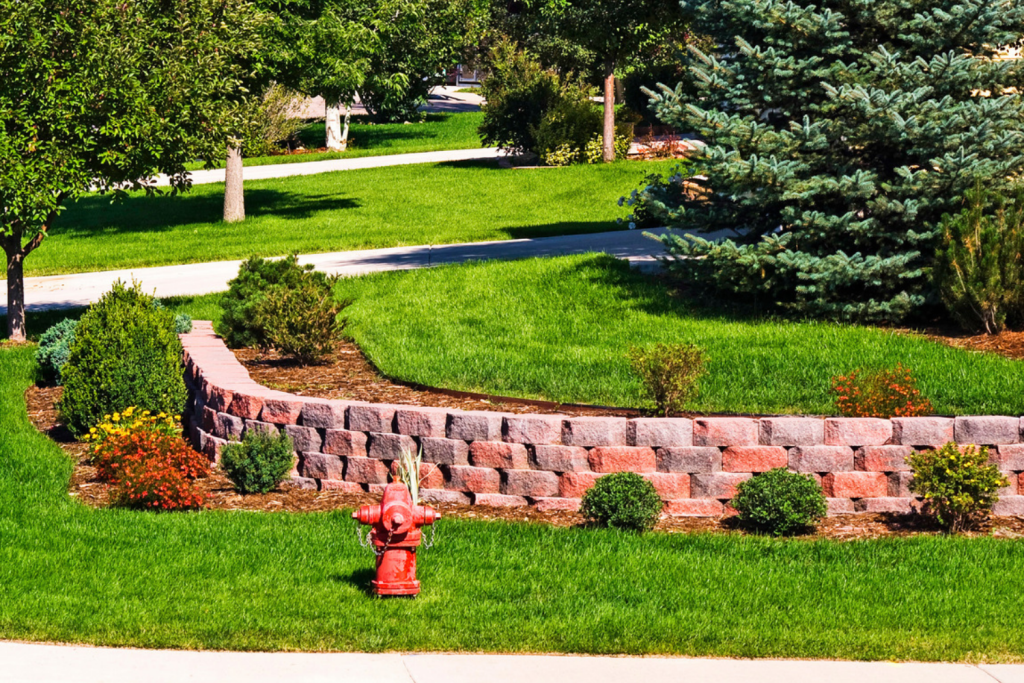
Concrete block is the workhorse for most residential hillsides. Segmental block systems interlock without mortar, which lets the wall flex slightly with sandy soil instead of cracking. Manufacturers offer many colors and textures, and a matching cap can tie the wall into a nearby paver patio.
Natural Stone and the Classic Stone Wall Look
Natural stone fits Mount Dora’s older streets. A stone wall costs more than block, but its irregular texture suits historic homes and mature oaks in a way few manufactured products match.
Brick Wall and Brick Retaining Wall Styles for Older Neighborhoods
A brick wall brings a similar sense of age. Brick works well for lower walls beside vintage homes, and builders often pair a brick face with a concrete or block structure behind it when the wall carries real weight.
Gabion Walls and Concrete Retaining Wall Options for Steeper Grades
Steeper grades call for heavier solutions. Gabion walls are wire baskets filled with rock, and they hold a hillside through sheer weight while letting water pass freely. A concrete retaining wall, poured with steel reinforcement, handles the largest loads and the steepest sites, though it costs more and usually needs engineering. Timber and sleeper walls appear in many catalogs, but treated wood eventually rots in Florida’s humidity, so stone and concrete serve permanent slopes better.
Why Wall Height and Proper Drainage Matter More Than the Retaining Wall Material
Homeowners often start with the material, but height and drainage decide whether a wall lasts.
What Changes When Taller Walls Enter the Plan
Every added foot of height holds back far more soil and water, so the load on the wall grows quickly. Taller walls need deeper footings, stronger reinforcement, and often an engineer’s review. Many cities and counties also require a building permit once a wall passes a set height, commonly around four feet. Mount Dora and Lake County set their own rules, so confirm them early. Smart design choices help too. Two shorter, tiered walls often outperform one tall wall, and they leave room for planting between the levels.
How Proper Drainage Keeps Water From Pushing Back
Water behind a wall does most of the damage. Saturated soil weighs far more than dry soil, and it pushes outward after every storm. Proper drainage relieves that pressure. Crews typically place gravel behind the wall and run a drainage pipe along the base to carry water away, and many walls include outlets that let water escape. A good design also works with a lot’s natural drainage instead of blocking it. That is why drainage planning comes first on any hardscape project.


